Category

3d Printing Design Tips

Mastering the Build: 3D Printing Design Tips

Designing for additive manufacturing is a completely different beast than designing for traditional machining or injection molding. The 3D Printing Design Tips category on the SNL Creative Blog is your technical playbook for turning “unprintable” digital files into flawless physical reality.

We bridge the gap between creative intent and machine limitations, offering deep dives into Design for Additive Manufacturing (DfAM). Whether you’re struggling with warping, looking to minimize support material, or trying to optimize wall thickness for strength, this is where you’ll find the answers.

What You’ll Master:

  • Geometry Optimization: Learn how to design self-supporting angles and avoid the dreaded “spaghetti” prints.

  • Tolerances & Clearances: Expert advice on designing moving parts and “print-in-place” hinges that actually work.

  • Slicing Secrets: How design choices impact your infill patterns, layer heights, and final structural integrity.

  • Finishing Touches: Designing with post-processing in mind—from easy-to-remove supports to sanding-friendly surfaces.

Mechanical Realization 3D Printed Production

By 3d Printing Design Tips, 3D Printing Technical Resources

SNL Creative’s technical paper on moving from prototype to high-volume 3D printed production. Covers batch consistency, repeatability tolerances by technology, material traceability, ISO 9001:2015 quality management, first-article inspection, and a checklist for qualifying a service bureau for production-grade additive manufacturing work.

Mechanical Realization: Moving from Design to High-Volume 3D Printed Production — SNL Creative
ISO 9001:2015 Certified Since 2008
Mechanical
Realization:
Moving from Design
to High-Volume
3D Printed Production
Batch Consistency  ·  Repeatability  ·  ISO-Governed Quality Systems
SNL Creative  |  Orange County, CA  |  snlcreative.com
Prepared for distribution to engineering and procurement teams.
SLA SLS FDM PolyJet CFF 3D Scanning Post-Processing
Section 01

Executive Summary

The transition from additive manufacturing prototype to repeatable, high-volume production is one of the most under-documented challenges in modern product development. Engineers routinely achieve excellent prototype results — only to discover that the same file, printed at volume across multiple builds and machines, produces inconsistent parts.

This paper documents the systematic process controls, material qualification protocols, and quality management infrastructure that SNL Creative applies to every production engagement. Our ISO 9001:2015-certified quality management system (QMS) is the operational backbone of this process — not a marketing credential, but a living system of documented procedures, corrective actions, and continuous improvement cycles.

The core thesis of this paper: production-grade additive manufacturing is a managed process discipline, not a technology problem. The equipment is mature. The gap is almost always in process documentation, material traceability, and quality infrastructure.

This paper covers:

  • Why prototype success does not predict production success
  • Machine qualification and build chamber management at scale
  • Material traceability and lot control procedures
  • Technology-specific repeatability tolerances (SLS, SLA, FDM, PolyJet, CFF)
  • First-article inspection and non-conformance workflows under ISO 9001:2015
  • Post-processing as a production variable
  • How to qualify a service bureau for production-grade work
Section 02

The Prototype-to-Production Gap

Most 3D printing service bureaus are optimized for prototyping. A single part, printed once, inspected visually, and shipped. This is not production. Production means the same part, printed to the same specification, across 50 or 5,000 units, delivered with traceability documentation that lets an engineer trace any non-conforming part back to its build, its material lot, its machine, and its operator.

2.1   The Four Failure Modes at Volume

  • Machine variance: Even identical machines from the same manufacturer produce dimensional variation. Thermal gradients, laser calibration drift, recoater wear, and chamber humidity all contribute. A part at 0.2 mm oversize in one machine may be 0.1 mm undersize in another. At prototype scale this is invisible. At 500 units it is a field quality issue.
  • Material lot variation: SLS powder has measurable variation in particle size distribution, refresh ratio, and moisture content between lots. Without lot traceability, root-cause analysis of a batch failure becomes guesswork.
  • Nesting and thermal proximity: Part placement within the build chamber affects local sintering temperature and cooling rate. Parts nested in center positions may exhibit different mechanical properties than parts at the chamber periphery. High-volume nesting strategies must account for this systematically.
  • Post-processing accumulation: Every post-process step introduces its own tolerance stack. Vapor smoothing reduces feature sharpness. Dyeing adds a surface layer. Support removal leaves witness marks. At volume, these effects must be characterized, documented, and held to specification.

2.2   Why ISO 9001:2015 Specifically Addresses This

ISO 9001:2015 is a process management standard, not a product standard. It does not specify tolerances or materials — it specifies that your organization must document its processes, establish measurable quality objectives, and demonstrate a systematic approach to identifying and correcting non-conformances. For additive manufacturing production, this maps directly to the failure modes above.

At SNL Creative, our QMS documentation covers machine calibration intervals, material receiving inspection, build parameter version control, first-article inspection protocols, and corrective action request (CAR) workflows. Every production job generates a job traveler that follows the part through every process step.

Section 03

Machine Qualification & Build Chamber Management

Production-grade additive manufacturing begins with qualified machines. A machine qualification protocol establishes the baseline capability of each system — its dimensional accuracy, surface finish repeatability, and mechanical property consistency — before any production work is assigned to it.

3.1   Qualification Protocol Overview

  • Geometric accuracy test artifact: A standardized test part containing critical features (holes, bosses, flat surfaces, thin walls) is printed at defined chamber positions and measured against nominal CAD geometry.
  • Chamber mapping: For powder-bed systems (SLS), the build chamber is divided into a grid. Test artifacts are placed at each grid position across multiple builds to characterize positional bias.
  • Mechanical property coupons: Tensile and flexural test bars are printed and tested to establish baseline material performance on that specific machine with that specific material lot.
  • Re-qualification triggers: Machine servicing, laser replacement, chamber cleaning, firmware update, or facility relocation each trigger a re-qualification event under our QMS procedures.

3.2   Nesting Strategy for Batch Consistency

For multi-part builds, nesting strategy is a documented process step, not a technician judgment call. Our nesting guidelines specify minimum part-to-part clearance, prohibited zones near chamber walls, orientation rules for anisotropic materials, and maximum build density by material type.

Parameter SLS (EOS P396) SLA (Neo 450) FDM (Fortus 450mc)
Min. part-to-part clearance4 mm2 mm3 mm
Wall exclusion zone10 mm8 mm12 mm
Max. build density (vol.)35%N/A (liquid)N/A (FDM)
Preferred Z-orientationMinimize Z-heightFeature-critical upMinimize support
Thermal equilibration wait12–16 hr cooldownPost-cure per specChamber cool 30 min
Section 04

Material Traceability & Lot Control

Material traceability is the documented chain of custody from raw material receipt to finished part. Without it, a batch failure cannot be root-caused, recalled, or prevented from recurring. Our ISO QMS requires that every production job references a specific material lot, and that all material lots are received, inspected, and logged before use.

4.1   Incoming Material Inspection

  • Certificate of Conformance (CoC) from manufacturer reviewed against specification
  • Particle size distribution check for SLS powders (PA2200, PA2241FR, TPU 1301)
  • Moisture content measurement for hygroscopic materials before use
  • Visual inspection and lot number recorded in QMS material log
  • Shelf-life tracking — expired or out-of-spec materials quarantined and dispositioned

4.2   Material Specifications Reference

Material Technology Tensile Strength Elongation HDT Key Application
PA2200 (Nylon 12)SLS48 MPa18%163 °CGeneral production, snap fits
PA2241FRSLS46 MPa14%163 °CFlame retardant, EV / aerospace
TPU 1301SLS6.4 MPa340%Flexible lattice, Digital Foam
ULTEM 9085FDM71 MPa5.8%153 °CHigh-temp, aerospace-grade
ULTEM 1010FDM64 MPa3.3%216 °CHighest temp FDM, autoclavable
Nylon 12CFFDM115 MPa1.3%163 °CCarbon-filled, structural
VeroUltraPolyJet60–65 MPa25–35%49 °CColor, fine detail, concept
Agilus30PolyJet1.4–3.1 MPa220–270%Flexible, overmold simulation
Onyx (CFF)CFF37 MPa1.7%145 °CBase matrix for continuous fiber

Lot numbers are recorded on the job traveler and retained for a minimum of 3 years under our ISO QMS document retention policy. In regulated-industry engagements (medical, aerospace), we can provide full material traceability documentation on request.

Section 05

Repeatability Tolerances by Technology

Dimensional repeatability is technology-specific and must be characterized for each machine-material combination. The tolerances below represent typical production capability at SNL Creative across qualified machines. They are not theoretical manufacturer specifications — they reflect actual measured performance on production builds.

Technology System XY Accuracy Z Accuracy Min. Wall Surface Finish (Ra)
SLSEOS P396±0.25 mm / ±0.1%±0.30 mm0.8 mm6–9 µm
SLAStratasys Neo 450±0.10 mm / ±0.1%±0.10 mm0.5 mm1–3 µm
FDMFortus 450mc±0.20 mm / ±0.1%±0.20 mm1.0 mm10–16 µm
PolyJetStratasys J750±0.10 mm / ±0.1%±0.10 mm0.6 mm1–2 µm
CFFMarkforged±0.20 mm / ±0.15%±0.20 mm1.2 mm8–12 µm

5.1   Factors That Degrade Production Repeatability

  • Thermal cycling between builds: Machines that do not reach full thermal equilibrium between builds show higher dimensional variance. Our production schedule accounts for required cooldown periods.
  • Powder refresh ratio (SLS): The ratio of virgin to recycled powder directly affects part density and mechanical properties. We maintain documented refresh ratios per material specification.
  • Humidity: Nylon-based materials are hygroscopic. Ambient humidity above 50% RH during printing measurably degrades surface finish and dimensional accuracy. Our facility maintains controlled environmental conditions.
  • Layer adhesion at feature boundaries: Overhanging features, thin walls, and small-diameter holes behave differently at the boundary of their printable envelope. DfAM review at project intake identifies these features before production begins.
Section 06

ISO 9001:2015 Quality Management in Practice

ISO 9001:2015 certification means an accredited third-party auditor has verified that our quality management system meets the international standard for process control, continual improvement, and customer-focused quality management. For production clients, this means the following procedures are operational — not aspirational.

6.1   First-Article Inspection (FAI)

Every new production part receives a documented First-Article Inspection before full production release. The FAI package includes:

  • Dimensional report: measured vs. nominal on all critical-to-function dimensions
  • Material certification: CoC reference and lot number
  • Process parameter record: machine ID, build file version, print date, operator
  • Surface finish measurement where specified
  • Customer sign-off or internal disposition before production release

6.2   Non-Conformance and Corrective Action

When a non-conforming part or batch is identified — whether in-process, at final inspection, or via customer return — our QMS triggers a formal non-conformance record. The workflow:

  • Identification: Non-conforming material is physically segregated and tagged
  • Disposition: Use-as-is, rework, scrap, or customer concession — documented
  • Root cause analysis: 5-Why or fishbone analysis for recurring issues
  • Corrective Action Request (CAR): Process change documented, implemented, verified
  • Effectiveness review: Follow-up audit confirms the corrective action held

6.3   Document and Record Control

All production build files, machine parameter sets, and inspection records are version-controlled under our QMS document control procedure. A client can request the exact build parameters used for any job produced at SNL Creative within our retention period. This is critical for medical device and automotive applications where production records must be maintained for the life of the product.

Section 07

Post-Processing as a Production Variable

Post-processing is not a cleanup step — it is a manufacturing process step that must be as controlled and documented as the print itself. Inconsistent post-processing is responsible for a significant share of production non-conformances in additive manufacturing.

Process System Effect on Geometry Effect on Surface Tolerance Impact
Vapor smoothingAMT PostPro3DMinimal (<0.1 mm)Ra: 9 µm → 0.4 µmSpecify pre-smooth dims
Dye finishingDyeMansion DM60NoneColor penetration ~0.1 mmNone dimensional
Bead blastManualNoneMatte, uniformNone dimensional
Powerfuse S (SLS)DyeMansionMinimal (<0.05 mm)Glass-smooth surfaceAccount for material removal
Support removal (FDM)Manual / bathNoneWitness marks possiblePost-removal inspection req.

Critical-to-function surfaces that will receive post-processing must be identified in the design review. Nominal dimensions should be specified pre-post-process, with a documented expectation of the dimensional change introduced by each step.

Section 08

Qualifying a Service Bureau for Production

Not all additive manufacturing service bureaus are equipped for production work. The following checklist represents the minimum qualification criteria that engineering and procurement teams should evaluate before committing a production program to an external 3D printing partner.

Qualification Criterion What to Ask Red Flag
Quality certificationISO 9001:2015 or AS9100 current? Third-party audited?Self-declared quality, no external audit
Machine qualification recordsCan you share dimensional accuracy data from your production machines?No documented characterization data
Material traceabilityHow do you track material lots? What is your retention period?No lot-level traceability
First-article inspectionDo you provide FAI packages? What is included?Visual inspection only, no dimensional report
Non-conformance processWhat happens when a batch fails inspection?No formal process, handled case-by-case
Environmental controlsIs your facility temperature and humidity controlled?No monitoring, no records
Production capacityWhat is your machine uptime? What is your capacity utilization?No data, or machines frequently unavailable
Post-processing traceabilityAre post-process parameters documented per job?Post-processing is informal or operator-driven
Section 09

Conclusion

High-volume 3D printed production is achievable — but only with the process infrastructure to support it. The technology is not the constraint. The constraint is documentation, traceability, qualification, and a quality management system that treats every build as a production event with a record, not a one-off service transaction.

SNL Creative has operated under ISO 9001:2015 since 2008 — not because our clients required it, but because we recognized early that the path to production-grade additive manufacturing ran through process discipline, not technology alone. Our equipment includes the EOS P396, Stratasys Neo 450, Stratasys Fortus 450mc, Stratasys J750, Markforged CFF systems, and Bambu Lab platforms, all operating under a unified QMS.

If you are evaluating SNL Creative for a production program, we welcome a process review call. We can walk through our QMS documentation, share qualification data for the technology relevant to your application, and provide sample FAI packages from comparable production jobs.
Company
SNL Creative
Website
Location
Orange County, CA
© 2025 SNL Creative  |  snlcreative.com  |  ISO 9001:2015 Certified  |  Confidential — For Distribution to Engineering and Procurement Teams

3D Printing Digital Foam

By 3d Printing Design Tips

SNL Creative, a leading design and additive manufacturing studio specializing in high-end 3D printed products, is proud to announce its official role as a Serial Production Partner in the EOS Digital Foam® Network. This collaboration marks a significant advancement in the scalable production of digitally engineered, foam-like parts for high-performance applications.

The Digital Foam Network, developed by EOS, brings together industry leaders across hardware, materials, software, post-processing, and consulting to unlock the full potential of 3D printed lattice structures. The initiative aims to replace traditional foam components with digitally tunable structures for improved performance, comfort, and sustainability across industries like sports, medical, mobility, and consumer products.

As a serial production partner, SNL Creative provides end-to-end manufacturing capabilities including:

  • High-resolution lattice printing using the EOS P 396 industrial 3D printer
  • Advanced surface finishing and coloring through DyeMansion’s Powerfuse S and DM60 systems
  • In-house design, engineering, and assembly services
  • Expertise in skin-contact safe and USP Class VI-certified materials

“SNL Creative’s strength lies in transforming ideas into best-in-class products, and the Digital Foam Network aligns perfectly with that mission,” said Lindsey Zindroski, CEO and Co-Founder of SNL Creative. “We’re excited to lead the production side of this network and help push the boundaries of what’s possible with additive manufacturing.”

Digital Foam is already making headlines, including SNL Creative’s work on the Wilson Airless Basketball, a lattice-structured, 3D printed sports innovation that went viral in 2023.

To learn more about SNL Creative’s capabilities or inquire about collaboration within the Digital Foam Network, visit www.snlcreative.com.


About SNL Creative
Founded in 2008, SNL Creative is a California-based advanced manufacturing studio known for pushing the limits of full-color 3D printing, lattice design, and additive-driven product development. Serving clients across fashion, medical, sports, and technology sectors, SNL offers complete production services under one roof.

Redefining Modern Manufacturing: Inside SNL Creative

By 3d Printing Design Tips, Manufacturing

Redefining Modern Manufacturing: Inside SNL Creative with Lindsey Zindroski

This week on Making Things Fun, Cool, and Sexy, host Christine Holo takes us inside the creative hub of Southern California’s own SNL Creative, sitting down with CEO and co-founder Lindsey Zindroski for an insightful and inspiring conversation.

From 3D-printed basketballs and footwear to camera systems for Avatar: The Way of Water, SNL Creative is more than just a service provider—it’s a design-forward, innovation-driven studio pushing the boundaries of additive manufacturing.

From Software to SLS: Lindsey’s Journey into 3D Printing

Lindsey began her career in enterprise software, working globally in technical support and large-scale deployments. But after co-founding SNL Creative with her husband, she found her passion in product development, customization, and digital manufacturing.

What started as a customizable toy platform—where users could build avatars and receive physical versions by mail—evolved into a full-service design and 3D printing company serving industries like fashion, sports, entertainment, and medical devices.

What SNL Creative Does Differently

While many 3D printing companies focus on speed and prototypes, SNL Creative specializes in full production—offering digital design, prototyping, and end-use part manufacturing under one roof.

But what truly sets them apart is their attention to finish, function, and storytelling. SNL doesn’t just deliver parts—they help brands bring visions to life, with beautifully finished, highly functional products made through advanced 3D printing and post-processing techniques.

Highlights from the Lab

Lindsey walked Christine through SNL’s additive playground, which includes:

  • PolyJet color printing for full-color, photo-realistic models
  • SLS and elastomeric powders for flexible, high-performance parts
  • FDM and CFF printers for strong, lightweight structural components
  • Advanced post-processing for production-grade finish and color

Some standout projects include:

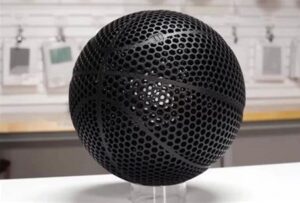
  • The Wilson Airless Basketball, a 3D-printed, fully functional, and lattice-structured basketball that sold out within hours.
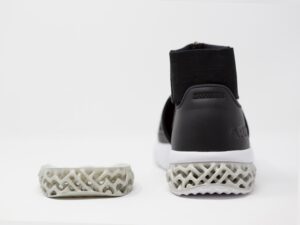
  • Footwear innovation, where designers leverage lattice structures to create futuristic, functional midsoles and fashion-forward custom shoes.
  • Avatar camera housings, custom printed for James Cameron’s crew using carbon fiber composites.

Building a Culture That Works

As the California Area Manager for Women in 3D Printing, Lindsey also spoke about the importance of creating supportive, inclusive environments in tech and manufacturing. She emphasized the need for fair pay, leadership opportunities, and work-life balance—especially for women navigating traditionally male-dominated fields.

What’s Next for SNL Creative?

With major growth in the past year—including a new facility, expanded technology, and high-profile production launches—SNL Creative is poised for the next wave of digital manufacturing. From sustainability efforts and material innovation to expanding into new industries, Lindsey envisions a future where additive becomes a cornerstone of how products are made, not just prototyped.

“It’s no longer the future—it’s the present,” Lindsey says of 3D printing. And with leaders like her at the helm, the future looks bold, beautiful, and very much in production.

Scaling Creativity with 3D Printing

By 3d Printing Design Tips

Scaling Creativity with 3D Printing:

What does nearly 30 years in additive manufacturing look like? For Shawn Zindroski, Co-Founder and COO of SNL Creative, it’s a journey of constant innovation, creative passion, and redefining what’s possible in product design and production.

On a recent episode of the Additive Snack podcast, host Fabian Alefeld sat down with Shawn to talk about his path through the evolving world of 3D printing—from his early days as a model maker to becoming a leader in creative, end-to-end additive manufacturing.

From Rapid Prototyping to Product Innovation

Shawn began his career in the late ’90s at one of the first service bureaus spun out of 3D Systems. Starting with stereolithography and rapid prototyping, he quickly developed a hands-on understanding of the full additive workflow—knowledge that would shape his entire career.

After working in the automotive concept studio world and founding a service bureau focused on show car development, he was tapped by electric vehicle startup Faraday Future to build their in-house additive manufacturing department. This gave him deeper exposure to production-scale applications across the entire vehicle.

The Birth of SNL Creative

The idea for SNL Creative was sparked during a moment of family fun—customizing avatars on a Nintendo Wii. Shawn and his wife, a software engineer, saw the potential to combine digital customization with 3D printing, leading to the creation of Carbon Kids: fully customizable figurines. That passion for creativity and digital-to-physical workflows still fuels the company today.

SNL’s early success caught the attention of Disney, who became their first major client. Since then, SNL has evolved into a full-scale product development and additive manufacturing studio serving fashion, medical, automotive, and consumer industries.

Partnering with Wilson on the Airless Basketball

One of SNL’s most talked-about collaborations is with Wilson Sporting Goods on their groundbreaking airless 3D printed basketball. The ball’s unique design and bounce performance generated global buzz—demonstrating that additive can not only perform but also captivate.

SNL helped take the ball from concept to production, managing complex processes like vapor smoothing and deep dye coloring. It was a true team effort, involving close collaboration with partners like EOS and DyeMansion.

Looking Ahead: Materials, Traceability & Smart Products

Shawn sees a bright future for additive—one that includes automation, robotics, sustainable materials, and even parts that do more than just function. SNL is already experimenting with embedded nanotechnology for secure digital fingerprints inside resin-based parts, enabling full traceability and counterfeit prevention.

In addition to high-performance applications, Shawn is passionate about relocalizing manufacturing in the U.S. and helping companies rethink their supply chains through digital tools and scalable production.

Final Thoughts

Whether it’s a fashion brand looking to create bespoke wearables or a global sports company seeking performance innovation, SNL Creative is leading the way by combining engineering, artistry, and strategy under one roof.

As Shawn puts it: “We’re helping create experiences and connections between products and people. That’s what drives us.”


Want to learn more about how SNL Creative can help bring your ideas to life with additive manufacturing? [Contact us today →]

Exploring Computational Design, AI, and the Future of Fashion and Footwear in 3D Printing with Parametriks

By 3d Printing Design Tips

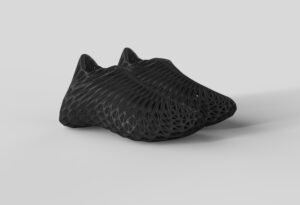
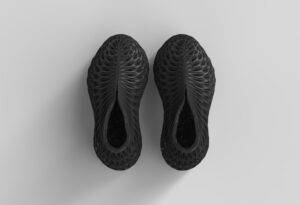
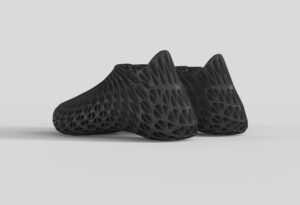
SNL Creative would like to welcome Nathan Smith, owner of Parametriks . “Today, we are exploring an extraordinary shift in footwear and fashion design. We are in the midst of not just a Renaissance, but a Revolution, driven by the power of additive manufacturing and computational design.”


Computational design further fuels this revolution, providing designers with sophisticated tools to develop dynamic design systems. These systems can adapt to a multitude of inputs, such as digital foot scans, enabling the creation of hyper-specific and personalized products that move beyond the limitations of traditional sizing and mass production. You can witness Parametrik’s 3d printed designs at Rapid 2024 from June 25-27th at SNL Creatives booth #2651


SNL How do see additive manufacturing playing a critical role in how we manufacture bespoke footwear


Parametriks: There is a Revolution in footwear design and creation. Additive manufacturing is now giving nearly anyone access to the possibility of quickly and cheaply iterating on design options and even production. Because of this, smaller entities and designers can stand up next to the massive shoemakers of today.


SNL: Can you share how computational design has expanded in Footwear design?


Parametriks: Computational Design further fuels this possibility by giving a designer the tools to create a Design System and not just a one-off. Once a Design System is created, a multitude of input parameters can be endlessly changed, resulting in either completely different designs or designs reacting to hyper-specific inputs.


SNL: What are the key advantages of utilizing digital foot scans over traditional lasts in shoe design and manufacturing?


Parametriks: Digital foot scans will replace the lasts of old allowing for nuances in foot shape and even the ability to tune performance. Utilizing this data as input to the Design System moves thinking past standard sizing and the one-size-fits-all model into something extremely nuanced, not molded for the masses, but printed to foot.


SNL: How do you utilize AI to explore new potentials in fashion design and how AI is integrated into your creative processes


Parametriks: We utilize ai to quickly explore new potentials by referencing our designs in other fashion products. To some degree, we train closed ai models utilizing our design and actively give feedback to not only push the ai model forward, but the design as well. This allows for rapid studies of new products and even the exploration of possible brand partnerships. The next step in 3D printing is using ai to create a printable file based on a prompt or set of references. Current ai models are able to create rudimentary 3D data but the nuances of Class A modeling are on the horizon for ai to replicate. Once this is possible, other methods of fabrication can be utilized to create finessed industrial design products just as we do today.

SNL: In what ways can computational design be integrated with other data inputs to create more efficient and innovative products?


 Parametriks :The most exciting thing about the future of computational design is the ability to create hyper-specific designs based on nuanced inputs such as foot scan (shape) and pressure point data as well as designs aimed to improve performance or correct development issues (health). This expands even further when you consider other types of fashion products and industrial design applications.


SNL: How do you see the role of designers evolving as computational models become more prevalent and capable of constant updates


Parametriks :Computational-based designs are infinitely powerful in their ability to accept new forms of data and inputs. To some degree, a computational-based design is never complete, just baked as a marker in time. The beauty of computational models is that they can also be modified, added onto, and made more efficient to an endless degree, thus updating the results infinitely; not just one-off design but a Design System that updates results over time and based on new inputs.


SNL : What an insightful and thought-provoking discussion we’ve had today! We’ve explored the revolutionary impact of 3D printing and computational design on footwear and fashion, delving into the democratization of the design process, the customization capabilities afforded by digital foot scans, and the evolving role of AI in this dynamic landscape. From creating hyper-specific, personalized products to leveraging AI for rapid design iteration, it’s clear that we are on the cusp of a new era in design and manufacturing.


Parametriks : As we move forward, it’s essential to balance innovation with the irreplaceable touch of human creativity, ensuring that technology serves as a tool to enhance rather than replace the designer’s vision. The future holds endless possibilities, and it’s an exciting time to be part of this transformation.


Thanks, Nathan for sharing your expertise and insight into the new workflows that integrate AI and Advanced Computational design. Let’s continue to push the boundaries of what’s possible, embracing the fusion of technology and creativity to shape the future of fashion and footwear design. You can witness Parametrik’s 3d printed designs at Rapid 2024 from June 25-27th at SNL Creatives booth #2651

SNL Creative showcasing at Rapid-TCT 2024

By 3d Printing Design Tips

🌟 You’re Invited: Experience the Future of Creativity with SNL Creative at Rapid 2024 in Los Angeles, CA! 🌟

CLICK HERE and Attend as our Guest
Dear SNL Community,

I’m thrilled to extend a special invitation to each of you to join us at Rapid 2024 in Los Angeles, CA—the premier event for all things innovative and transformative in the world of 3D printing and additive manufacturing.

At SNL Creative, we’re passionate about pushing the boundaries of creativity and technology, and Rapid 2024 presents an unparalleled opportunity to showcase our latest innovations, connect with industry leaders, and inspire future collaborations.

Join us at Booth #2651 at the Los Angeles Convention Center, where you’ll have the chance to:

🚀 Explore Cutting-Edge Solutions: Immerse yourself in a world of innovation as we unveil our latest advancements in 3D printing technology. From groundbreaking materials to revolutionary applications, prepare to be inspired by the limitless possibilities of additive manufacturing.

🤝 Network with Industry Experts: Connect with fellow professionals, thought leaders, and innovators who are shaping the future of manufacturing. Whether you’re seeking insights, partnerships, or simply looking to exchange ideas, Rapid 2024 is the ultimate platform to expand your network and forge meaningful connections.

💡 Gain Insider Insights: Don’t miss our engaging presentations and demonstrations, where our team of experts will share valuable insights, best practices, and real-world case studies. From industry trends to actionable strategies, empower yourself with the knowledge and expertise needed to stay ahead in today’s fast-paced landscape.

🎉 Experience the Future of Creativity: Get ready to be inspired, challenged, and energized as we celebrate the boundless potential of creativity and innovation. From interactive exhibits to hands-on workshops, Rapid 2024 promises an unforgettable experience for enthusiasts, professionals, and curious minds alike.

But wait, there’s more! As a token of our appreciation for your continued support, we’re offering complimentary passes to Rapid 2024 for our valued connections and customers. Simply click the link below when registering online to claim your free admission.

We can’t wait to welcome you to our booth and share our passion for pushing the boundaries of what’s possible. Together, let’s embark on a journey of exploration, discovery, and endless creativity at Rapid 2024!

See you in Los Angeles!

Warm regards, SNL Creative

#Rapid2024 #AdditiveManufacturing #Innovation #Creativity #Technology #SNLCreative #EventInvitation #Networking


SNL Creative Named Production Partner for Wilson Airless Gen1

By 3d Printing Design Tips

WILSON® ANNOUNCES PLAN TO SELL FIRST-EVER, 3D-PRINTED BASKETBALL


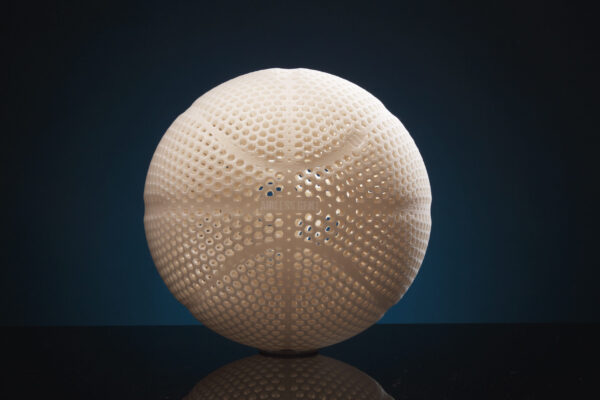
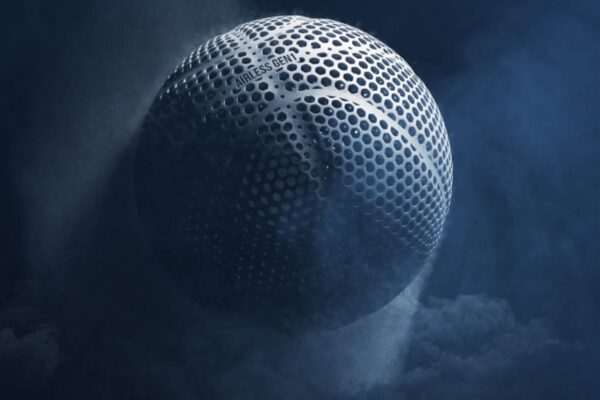
CHICAGO (Feb. 7, 2024) — Wilson Sporting Goods Co. today announces the release of the Wilson Airless Gen1TM – the innovative, first-of-its-kind 3D-printed basketball that never needs to be inflated. Building off the success of the Airless Prototype debut last year, the limited-edition Wilson Airless Gen1 basketball will be available for purchase on Feb. 16.


“We were overwhelmed by the excitement from our Airless Prototype, and we knew it was time to bring t


his rare, first-of-its kind innovation to the world,” said Kevin Murphy, General Manager, Team Sports at Wilson. “Wilson has gone where no brand has gone before with the release of the Airless Gen1 basketball, further inspiring the next generation of sports innovation.”


The Wilson Airless Gen1 has similar functionality to the prototype, however over the last year, the Wilson Labs team has taken the steps to increase performance and streamline the manufacturing process. The basketball nearly fits the performance specifications of a regulation basketball, including its weight, size and rebound (bounce). While the Wilson Airless Gen1 is crafted for play, it is truly a coveted, technology-infused product meant to create and inspire a new community of innovation enthusiasts and basketball hype curators alike.


The main updates to the Wilson Airless Gen1 include:

  • Improved functionality: Upgraded lattice design for more consistent performance and bounce. T
  • he ball still includes the same see-through lattice with eight panel-like “lobes.”
  • Streamlined manufacturing: Holes integrated within the channels to help speed up the manufacturing process, making it faster to create each ball. The basketball remains airless and does not to be inflated.
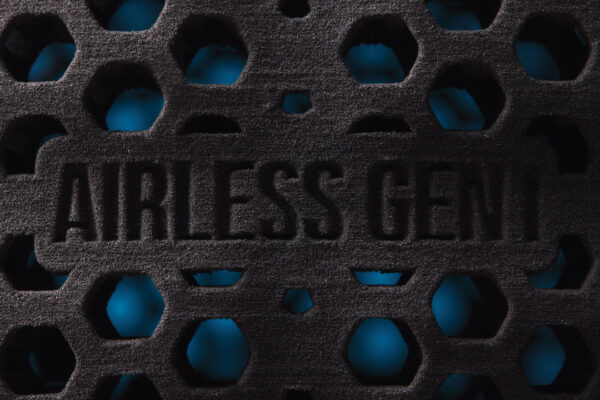
  • Enhanced customization: Each ball will have a built-in label for customization and will feature the exact, limited number in which it was produced.
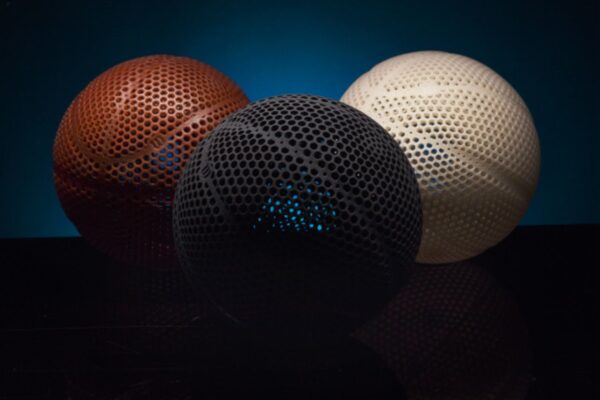
  • Color variety: In addition to the recognizable jet-black colorway of the prototype, the Airless Gen1 will also be available in brown and natural white.


The Wilson Labs team leveraged the same game-changing process to create the Wilson Gen1 Airless basketball with key partners: General Lattice provided computational design services for elevated customization, DyeMansion provided color and finishing solutions, EOS provided technical oversight and a roadmap for mass production, while SNL Creative was the primary manufacturing hub for this first launch.


Limited units of the Wilson Airless Gen1 will be available exclusively on Wilson.com beginning Friday, Feb. 16 for $2,500. Fans can also experience the product at Wilson’s on-site activation at NBA Crossover in Indianapolis from Feb. 16 – 18. To learn more, please visit Wilson.com and follow along @wilson and @wilsonbasketball.


About: Chicago, USA-based Wilson Sporting Goods Co., part of Amer Sports Corporation, is the world’s leading manufacturer of high-performance sports equipment, apparel, footwear and accessories. The Company brings more than a century of innovation, history and heritage across many sports including Racquet Sports, Baseball, Softball, American Football, Basketball, Volleyball, Soccer and Golf.


In Basketball, Wilson is the supplier of Official Game Basketballs for the National Basketball Association® (NBA), the Women’s National Basketball Association® (WNBA), National Collegiate Athletic Association® (NCAA) for March Madness and the Final Four, Basketball Champions League (BCL), Basketball Africa League (BAL) and FIBA 3×3.

// Featured In //

SNL Creative proudly announces the Addition of DyeMansion’s Powerfuse S and DM60 Full Color Systems

By 3d Printing Design Tips, Automotive, Manufacturing

SNL Creative has a reputation for developing high value products with Industrial 3D printing. Their vision is where 3D printed products are part of our everyday life. In the next phase of their on demand manufacturing solutions, SNL Creative teams up with DyeMansion to deliver Vapor Polishing and Dyeing across the suite of the AM technologies; Including SLS and FDM.


The Power of Vapor Polishing

Vapor Polishing is a post-process technique that evenly relaxes the molecular chains of the surface layer resulting in smooth surfaces.

  1. Improved Aesthetics: A deep dye process with vivid colors that are scratch, UV, and heat resistant.
  2. Enhanced Functionality: Easy to clean sealed surfaces that are resistant to Chemicals. Improves flexibility and durability of 3D printed parts. Reduces part roughness by 80% and Reduces friction by 33.8%
  3. Certified Safe and sustainable: Food and skin contact compliant. A sustainable process for sealed surfaces. FDA certified for your Food and Beverage applications. Prevents parts against bacteria growth. A reproducible and traceable process that is ISO certified for end user applications.

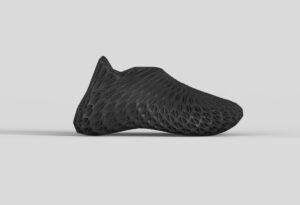
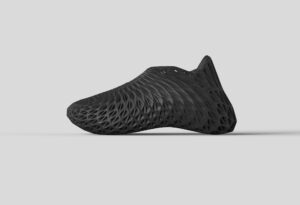
3d printed shoes

The Art of Dyeing

Dyeing is another valuable post-processing technique that goes hand in hand with vapor polishing. It involved adding color to the 3D printed part and offers a set of diverse advantages.

  1. Customization and Branding: Limitless color choices from standard color databases or custom made colors.
  2. Color coding and identification: In industries like health care and manufacturing, color coded parts can be used for easy identification, sorting, and assembly.
  3. Enhance UV resistance: Dyes can provide UV resistance, preventing color fading or degradation when expose to sunlight. This is crucial for outdoor and Long-term applications.

3d printed fashion

The Synergy of Vapor Polishing and Dyeing

When combined, vapor polishing and dyeing yield an impressive synergy that adds value to 3D printed parts. The smooth pristine surface achieved through vapor polishing serves as an idea canvas for dyeing, ensuring the colors are vivid, consistent, and long-lasting. This combination is particularly advantageous for producing consumer goods, intricate prototypes, and industrial components.

3d printed basketball

Unlocking the Future Life-Like Prosthetics with Color 3D Printing by Stratasys

By 3d Printing Design Tips, Uncategorized

Stratasys J750 color 3D printing is unlocking the future of special effects (SFX) and stop motion animation industries with life-like prosthetics. One of the most recent advancements is introducing color 3D printing technology, particularly with the Stratasys J750 system. This groundbreaking innovation revolutionizes how artists and technicians create life-like prosthetics, intricate stop-motion animation sets, and stunning SFX elements.

The Stratasys J750 is a high-end PolyJet 3D printer, known for its ability to print in multiple materials and colors simultaneously. With over 500,000 color combinations and a wide range of material properties, the J750 empowers artists to create realistic textures, gradients, and transparencies for their projects. The printer’s layer resolution, as fine as 14 microns, enables the production of intricate and life-like details that were previously difficult or impossible to achieve with traditional methods.

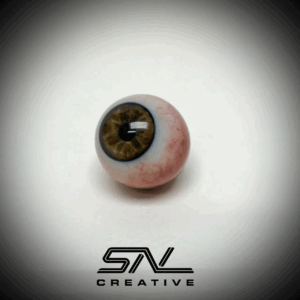
Revolutionizing life-like prosthetics: the Stratasys J750 has been instrumental in advancing 3D printing for SFX and animation. Makeup artists can now design and print complex, realistic-looking prosthetic pieces, such as skin textures, wounds, or even entire facial structures, with remarkable precision. These 3D printed prosthetics not only save time and resources but also provide an unmatched level of detail, allowing filmmakers to tell stories with greater authenticity.

Transforming Stop Motion Animation: In the realm of stop motion animation, the J750 has made a significant impact by allowing animators to rapidly produce detailed, multi-colored, and textured puppets, sets, and props. The ability to print intricate and movable parts, such as facial features or limbs, has streamlined the animation process and enabled the creation of more expressive characters. The J750’s precision and versatility have opened up new creative possibilities, pushing the boundaries of what can be achieved in stop motion animation.

Special Effects Breakthroughs: Beyond prosthetics and animation, the J750 is also redefining the SFX industry by enabling artists to print realistic props, such as weapons, vehicles, or even entire miniature sets, in stunning detail. The technology’s ability to produce vibrant, multi-material prints has made it an invaluable asset for creating captivating visual effects that captivate audiences.

Conclusion: The Stratasys J750 color 3D printing system is truly revolutionizing the special effects, life-like prosthetics, and stop motion animation industries. By offering unprecedented levels of detail, color, and material versatility, the J750 is enabling artists and technicians to push the boundaries of their creativity and bring their visions to life like never before.