Category

Manufacturing

3D Printing vs Injection Molding: Cost & Lead‑Time Comparison

By Manufacturing

Introduction

Product developers often face a critical choice: should they 3D‑print a component or invest in an injection mold? Each method has advantages and trade‑offs involving setup costs, per‑part pricing, lead time, design flexibility and scalability. This article compares the economics and timing of 3D printing versus injection molding, helping you decide which process suits your project.
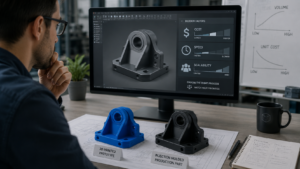
Side-by-side comparison of 3D printing and injection molding, showing a blue 3D printed part next to an injection molding machine with key differences in setup cost, per-part pricing, lead time, design flexibility, and scalability

How injection molding works

Injection molding involves heating a thermoplastic or thermoset polymer and injecting it into a machined steel or aluminum mold cavity. Once cooled, the mold opens to release the finished part. This method is ideal for high‑volume production because the per‑part cost drops dramatically once the mold is built. However, creating the mold is expensive, requires skilled tool makers and can take several weeks. According to manufacturing experts, injection molds have a massive up‑front cost and long lead time—often tens of thousands of dollars and four to twelve weeks to machine a durable production mold. For prototyping, this investment rarely makes sense.

How 3D printing works

Additive manufacturing builds parts layer by layer directly from a digital model using FDM, SLA, SLS, MJF or metal powder bed processes. This eliminates the need for expensive molds, enabling rapid iteration and one‑off production. However, per‑part costs remain relatively high compared with high‑volume injection molding because each part requires machine time and material consumption.

Cost comparison: up‑front investment

Injection molding’s major cost driver is the mold itself. For a simple part, an aluminum prototype mold might cost $5 000–$20 000, while a high‑volume steel tool can cost $25 000–$100 000 or more. Conversely, 3D printing requires no specialized tooling; you pay only for material and machine time. This means you can start producing parts almost immediately. A study from Cad Crowd notes that injection molding becomes uneconomical for early prototypes due to high initial investment and long lead time. If you need just a handful of parts for testing, 3D printing is usually cheaper.

Cost comparison: per‑part pricing

Once the mold is built, injection molding yields low per‑part costs—often pennies for small plastic components. 3D printing, however, has a relatively flat cost curve: the price per part remains roughly the same regardless of quantity. This is because additive processes do not leverage economies of scale; each part requires roughly the same amount of material and machine time. For example, producing 500 parts might cost $7 500 with 3D printing, while injection molding might cost $6 000 ($5 000 for the mold plus 500 × $2 per part). As volumes increase into the thousands, the savings from injection molding become even more pronounced.

Lead‑time comparison

Lead time is another critical factor. Injection molding projects typically require weeks to design, machine and test the mold. Any changes to part geometry necessitate reworking or completely remachining the tool, adding cost and time. 3D printing, on the other hand, can produce parts within hours or days. This agility allows for rapid prototyping, design iterations and short production runs. According to SNL Creative’s FAQ, standard prototypes can be turned around within 24–72 hours. If you need a small batch quickly or want to test multiple design iterations, additive manufacturing is unmatched.

Design flexibility and complexity

3D printing excels at producing complex geometries, internal channels and lattice structures that would be impossible or prohibitively expensive to mold. With injection molding, parts must have draft angles and avoid undercuts to allow demolding. Incorporating complex features often requires slides, lifters or multiple part assemblies, increasing tool cost. 3D printing supports complex internal features and organic shapes without additional tooling. Therefore, for complex parts with low to medium volumes, additive manufacturing is often the better choice.
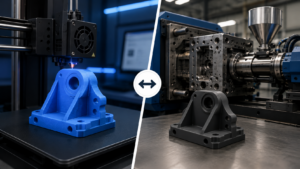
Side-by-side comparison of 3D printing and injection molding, showing a blue 3D printed part next to an injection molding machine with key differences in setup cost, per-part pricing, lead time, design flexibility, and scalability

Break‑even volume analysis

Determining the break‑even volume—the production quantity at which injection molding becomes cheaper than 3D printing—depends on material cost, part size and mold cost. A simplified approach is:

Break‑even quantity = (Mold cost) / (3D printing cost per part – injection molding cost per part)

For example, if the mold costs $10 000, and the 3D printing cost per part is $7 while the injection‑molded part cost is $2, the break‑even quantity is:

Break‑even quantity = 10 000 / (7 – 2) = 2 000 parts.

If your project requires fewer than 2 000 parts, 3D printing may be more cost‑effective. For larger volumes, injection molding’s lower per‑part cost will eventually offset the tooling expense.

Environmental impact

Additive manufacturing can reduce material waste by building only the material needed for the part, whereas injection molding may waste excess material in sprues and runners. However, injection molding can use recyclable thermoplastics more easily than some 3D printing processes. The sustainability advantages of each method depend on the specific materials and production volumes.

When to choose 3D printing

  • Prototyping and design validation: Quickly iterate designs without the expense of new molds.
  • Low‑ to mid‑volume production: Produce small batches with no tooling costs, and adjust designs between runs.
  • Complex geometries: Create intricate features and internal channels impossible to mold.
  • Customization and on‑demand manufacturing: Produce personalized parts or parts with multiple variants without retooling.

When to choose injection molding

  • High‑volume production: When demand exceeds thousands of parts, per‑part savings justify the initial mold cost.
  • Consistent part quality: Injection molding can produce parts with very consistent mechanical properties and surface finishes.
  • Material selection: Some materials, particularly certain engineering thermoplastics and elastomers, are more commonly available for injection molding.
  • Long product life cycles: For established products with stable designs, the initial tool investment spreads over many years.

Hybrid approach

Many companies use both techniques. They 3D‑print prototypes and low‑volume batches while refining the design; once demand justifies it, they invest in injection molds for high‑volume production. SNL Creative can support customers through this transition. Their design‑for‑manufacturing services help optimize parts for both processes, and their prototyping services offer quick turnaround times of 24–72 hours. When injection molding becomes viable, the company’s network of tooling partners can produce molds and continue production.

Conclusion

The choice between 3D printing and injection molding depends on quantity, budget, lead time and part complexity. Additive manufacturing eliminates tooling costs and shortens development cycles, making it ideal for prototypes and low‑volume production. Injection molding delivers low per‑part costs for high volumes but requires significant up‑front investment and longer lead times. By understanding the cost dynamics and design constraints of each process, you can choose the best manufacturing strategy for your product. SNL Creative’s expertise in both additive manufacturing and tooling support can help you navigate these decisions and scale your production efficiently.
Scaling with Confidence: Our Next Chapter Starts with ISO 9001

By Manufacturing

Scaling with Confidence: Our Next Chapter Starts with ISO 9001

The manufacturing landscape is undergoing a tectonic shift. For decades, the divide between rapid prototyping and industrial production was a chasm bridged only by massive capital investment and long lead times. Today, additive manufacturing (AM) has closed that gap, providing a path from digital concept to physical reality with unprecedented speed. But speed without structure is a liability.

At SNL Creative, we have always believed in building products with purpose. We aren’t just printing parts; we are engineering solutions. Today, we are proud to announce a milestone that codifies this philosophy: SNL Creative is now officially ISO 9001:2015 certified.

This certification is more than just a badge on our website or a certificate on our wall. It is a testament to the rigorous systems we have engineered to deliver repeatable, high-quality production across every technology in our facility. As we scale into larger production volumes, support highly regulated industries, and integrate more advanced hardware, our ISO certification ensures we are doing it with structure, accountability, and unwavering intention.

A Framework Built for the Modern Additive Era

Traditional manufacturing has had over a century to refine its quality control playbooks. CNC machining and injection molding rely on well-worn paths of inspection and standardization. Additive manufacturing, however, is dynamic. It is a digital-first frontier where the transition from a CAD file to a functional polymer or metal part involves complex thermal dynamics, chemical reactions, and intricate toolpaths.

Because additive manufacturing isn’t traditional, our processes can’t be either. Achieving ISO 9001:2015 certification required us to build a Quality Management System (QMS) that respects the unique nature of 3D printing while demanding the same level of discipline found in aerospace or medical device manufacturing.

Digital Traceability and Process Control

Our QMS is designed to support the fast-moving nature of prototyping while providing the “paper trail” required for full-scale production. In an additive environment, quality starts long before the laser hits the powder or the filament leaves the nozzle. It begins with:

  • File Integrity: Ensuring that the digital “source of truth” is managed, version-controlled, and protected.

  • Material Validation: Rigorous tracking of resin batches, powder health, and filament storage to ensure that material properties remain consistent from the first part to the ten-thousandth.

  • Machine Calibration: A strict maintenance and calibration schedule for our industrial fleet—including our SLS, FDM, Polyjet, SLA, and MJF systems—ensuring that every machine operates within a narrow, validated window of performance.

From the moment a file is uploaded to our system to the final post-processing and inspection, every step is documented and traceable. This creates a feedback loop where data drives improvement, and consistency becomes a mechanical certainty rather than a goal.

Why Quality Standards Matter to Our Partners

When an Original Equipment Manufacturer (OEM) or a design firm chooses a manufacturing partner, they are looking for more than a vendor; they are looking for a risk-mitigation specialist. Our clients trust us with their most valuable assets—their intellectual property and their timelines.

In the early stages of product development, a failed part or a dimensional inaccuracy can set a project back by weeks and cost thousands of dollars. As projects move into short-run production, the stakes only get higher. ISO 9001:2015 certification acts as a universal language of trust that reinforces our commitment to several key pillars:

1. Controlled, Repeatable Production

The biggest criticism of 3D printing has historically been “variability.” If you print a part on Tuesday, will it be identical to the part printed next month? Our ISO-certified processes are designed to eliminate that question mark. By standardizing every variable—from ambient humidity in the facility to specific cooling rates for MJF or SLS builds—we provide our partners with a repeatable manufacturing “recipe.”

2. Data-Driven Improvements

ISO 9001 is not a static set of rules; it is a philosophy of continuous improvement. We monitor performance metrics across our entire workflow. By analyzing non-conformance reports and customer feedback, we don’t just fix errors—we evolve our systems to prevent them from occurring in the first place. This proactive stance on quality reduces waste and ensures that our clients benefit from an increasingly efficient production line.

3. Meeting Regulatory and Industry Requirements

Many of the industries we serve—including aerospace, automotive, robotics, and medical technology—operate under strict regulatory oversight. By maintaining an ISO-certified QMS, SNL Creative simplifies the supply chain for these organizations. We speak the language of compliance, making it easier for our partners to integrate additive parts into larger, certified assemblies.

4. Centering the Customer Experience

At its core, ISO 9001 is about customer satisfaction. It forces an organization to look at its processes through the lens of the end-user. Whether we are producing a high-end visual prototype for a marketing launch or a custom jig for a factory floor, our focus remains on meeting the exact requirements and performance standards our clients demand.

Engineering the Future of Production

This certification marks a pivotal chapter in the evolution of SNL Creative. We are witnessing a shift where additive manufacturing is no longer “just for prototypes.” With the rise of advanced polymers, carbon-fiber-filled materials, and high-performance lattice structures like TPU 1301 Digital Foam, 3D printing is now a viable candidate for functional, consumer-ready parts.

As innovators look to scale their products without the massive overhead of traditional tooling, they need a partner who can scale with them. We have positioned our facility to be that go-to manufacturing partner.

  • Prototyping with a Path to Production: Because our prototyping processes are governed by the same QMS as our production runs, the transition from “proof of concept” to “market-ready” is seamless. There is no need to re-engineer the quality process when you decide to go from ten units to one thousand.

  • Advanced Hardware Integration: As we bring more industrial-grade hardware into our Cypress facility, our ISO framework allows us to onboard these technologies with immediate structure. We apply our validated workflows to every new machine, ensuring that “cutting edge” never means “unpredictable.”

  • Specialized Applications: For complex projects involving internal geometries, integrated electronics, or performance-weighted lattices, our certified processes provide the peace of mind that internal structures are as sound as the exterior finish.

The Foundation for What’s Next

We view this achievement not as a finish line, but as the foundation. The world of manufacturing is becoming more digital, more local, and more specialized. By combining the agility of 3D printing with the discipline of ISO 9001, SNL Creative is bridging the gap between “what if” and “what is.”

We are incredibly grateful to our dedicated team of engineers and technicians who have worked tirelessly to refine these systems. We are also thankful for our partners and clients, whose challenging projects have pushed us to sharpen our processes and expand our capabilities.

The future of manufacturing belongs to those who can combine creativity with consistency. It belongs to the companies that can move fast without breaking things. With our ISO 9001:2015 certification, we are ready to lead that charge.

Let’s build the future of manufacturing—together, with structure, with purpose, and with total confidence.


Ready to see how an ISO-certified additive workflow can transform your next project?

Whether you are looking for short-run production, specialized tooling, or high-performance prototypes, our team is ready to collaborate. Visit us at SNL Creative to explore our technologies or get an instant quote on your next build. We look forward to helping you scale.

Redefining Modern Manufacturing: Inside SNL Creative

By 3d Printing Design Tips, Manufacturing

Redefining Modern Manufacturing: Inside SNL Creative with Lindsey Zindroski

This week on Making Things Fun, Cool, and Sexy, host Christine Holo takes us inside the creative hub of Southern California’s own SNL Creative, sitting down with CEO and co-founder Lindsey Zindroski for an insightful and inspiring conversation.

From 3D-printed basketballs and footwear to camera systems for Avatar: The Way of Water, SNL Creative is more than just a service provider—it’s a design-forward, innovation-driven studio pushing the boundaries of additive manufacturing.

From Software to SLS: Lindsey’s Journey into 3D Printing

Lindsey began her career in enterprise software, working globally in technical support and large-scale deployments. But after co-founding SNL Creative with her husband, she found her passion in product development, customization, and digital manufacturing.

What started as a customizable toy platform—where users could build avatars and receive physical versions by mail—evolved into a full-service design and 3D printing company serving industries like fashion, sports, entertainment, and medical devices.

What SNL Creative Does Differently

While many 3D printing companies focus on speed and prototypes, SNL Creative specializes in full production—offering digital design, prototyping, and end-use part manufacturing under one roof.

But what truly sets them apart is their attention to finish, function, and storytelling. SNL doesn’t just deliver parts—they help brands bring visions to life, with beautifully finished, highly functional products made through advanced 3D printing and post-processing techniques.

Highlights from the Lab

Lindsey walked Christine through SNL’s additive playground, which includes:

  • PolyJet color printing for full-color, photo-realistic models
  • SLS and elastomeric powders for flexible, high-performance parts
  • FDM and CFF printers for strong, lightweight structural components
  • Advanced post-processing for production-grade finish and color

Some standout projects include:

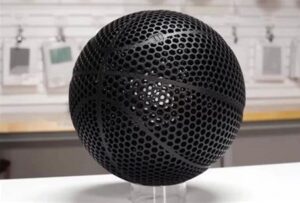
  • The Wilson Airless Basketball, a 3D-printed, fully functional, and lattice-structured basketball that sold out within hours.
  • Footwear innovation, where designers leverage lattice structures to create futuristic, functional midsoles and fashion-forward custom shoes.
  • Avatar camera housings, custom printed for James Cameron’s crew using carbon fiber composites.

Building a Culture That Works

As the California Area Manager for Women in 3D Printing, Lindsey also spoke about the importance of creating supportive, inclusive environments in tech and manufacturing. She emphasized the need for fair pay, leadership opportunities, and work-life balance—especially for women navigating traditionally male-dominated fields.

What’s Next for SNL Creative?

With major growth in the past year—including a new facility, expanded technology, and high-profile production launches—SNL Creative is poised for the next wave of digital manufacturing. From sustainability efforts and material innovation to expanding into new industries, Lindsey envisions a future where additive becomes a cornerstone of how products are made, not just prototyped.

“It’s no longer the future—it’s the present,” Lindsey says of 3D printing. And with leaders like her at the helm, the future looks bold, beautiful, and very much in production.

SNL Creative’s Full Production of Jean Dawson’s “Glimmer of God”

By Manufacturing

The Intersection of Art, Music, and Cutting-Edge 3D Printing

In the world of music, fashion, and digital art, artists are breaking boundaries and exploring new ways to express their vision. The collaboration between Jean Dawson, Totem, and SNL Creative for the “Glimmer of God” headpiece is a prime example of how advanced 3D printing, in-house tooling, and expert craftsmanship can bring an artistic concept to life.

At SNL Creative, we specialize in high-end full-color 3D printing, finishing, and packaging, providing end-to-end production solutions for brands and artists. The “Glimmer of God” headpiece is not just a product—it’s a fusion of music, culture, and next-generation manufacturing that was designed, produced, hand-painted, and packaged entirely at our Cypress, CA facility.


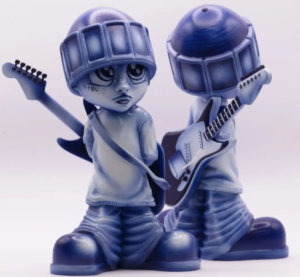
Jean Dawson , Totem production

The Vision: Jean Dawson’s “Glimmer of God”

Jean Dawson is known for his genre-blending music, avant-garde style, and artistic storytelling. The “Glimmer of God” headpiece, released through Totem, extends this creative vision into the physical world—a bold, sculptural statement piece that reflects identity, transformation, and rebellion.

The intricate design of the headpiece demanded a production process capable of achieving hyper-realistic details, durability, and premium aesthetics. That’s where SNL Creative’s full-service production capabilities came in.


How SNL Creative Brought It to Life

From Digital Concept to Fully Produced Product

Totem and Jean Dawson’s team approached SNL Creative with a vision—a digitally sculpted concept that needed to be manufactured, painted, and packaged at scale while maintaining the highest quality.

Using our in-house tooling department and advanced additive manufacturing capabilities, we executed the entire production process under one roof, ensuring precision, consistency, and authenticity in every piece.

The Production Process at SNL Creative

🔹 High-Resolution 3D Printing – We used our industrial-grade full-color 3D printing systems to produce the intricate details and textures of the headpiece.
🔹 In-House Tooling & Finishing – Our custom tooling department ensured that each piece maintained the desired structural integrity and smooth finishing.
🔹 Hand Painting & Detailing – Every “Glimmer of God” headpiece was individually hand-painted by our expert artists, adding a unique, high-end touch to each unit.
🔹 Custom Packaging – SNL Creative handled the entire packaging process, ensuring that the final product was ready for direct distribution—all made in Cypress, CA.


Why SNL Creative Was the Perfect Production Partner

Traditional manufacturing methods would have required outsourcing, high costs, and long lead times, but our end-to-end production model allowed us to:

Produce with High Precision – Our 3D printing technology captured every sculpted detail exactly as envisioned.
Control the Entire Process – With design, production, finishing, and packaging all handled in-house, we ensured quality control at every step.
Create a Handcrafted, Artistic Finish – Unlike mass-produced items, every headpiece was meticulously painted for a premium, custom look.
Manufacture Locally – By producing everything in Cypress, CA, we eliminated overseas production delays and ensured that every piece met our exacting quality standards.


Redefining the Future of Artistic Manufacturing

The Jean Dawson x Totem collaboration showcases how 3D printing, craftsmanship, and full-scale production capabilities can merge to create high-end, limited-edition collectibles.

At SNL Creative, we’re more than just a 3D printing service—we’re a full production partner, helping artists and brands transform digital concepts into beautifully crafted physical products.


Collaborate with SNL Creative

Looking to create custom high-end collectibles, wearables, or artistic pieces? Whether you’re an artist, fashion designer, musician, or brand, SNL Creative has the expertise to bring your vision to life from concept to final product.

📍 Made in Cypress, CA – Serving brands, artists, and designers globally.

📞 Call us today at (714) 420-8957
💻 Visit our website: SNL Creative

🔗 Contact Us to Start Your Project at Orders@snlcreative.com

On-Demand Production: SNL Creative’s Bambu Lab Print Farm Solves Supply Chain Constraints

By Manufacturing

In today’s unpredictable supply-chain environment, many businesses across Orange County, Los Angeles, and Cypress, California are dealing with extended lead times, rising costs, and delays tied to overseas production. Companies that rely on traditional injection molding or offshore suppliers are often hit hardest—facing material shortages, shipping disruptions, and limited flexibility when demand shifts.

At SNL Creative, we help solve these challenges through localized, on-demand manufacturing. Our Bambu Lab–powered print farm is a high-speed, scalable 3D printing production system designed to manufacture critical components locally, in volume, and on demand—removing dependency on fragile global supply chains.

Why Local Companies Are Moving to On-Demand Manufacturing

For manufacturers in Cypress, Anaheim, Irvine, and surrounding Southern California cities, traditional supply chains often mean:

  • Long lead times for overseas parts

  • High minimum order quantities

  • Excess inventory and warehousing costs

  • Risk from geopolitical uncertainty and shipping delays

By shifting production closer to home, companies regain control over their manufacturing timelines and costs.

With SNL Creative’s local print farm, you can:

  • Reduce lead times by producing parts in days instead of months

  • Lower costs by avoiding large MOQs and excess inventory

  • Increase supply-chain resilience with Southern California–based production

  • Scale flexibly as demand changes, without tooling delays

This approach is especially effective for teams that need speed, precision, and adaptability.

Industries We Support with Local 3D Manufacturing

Our on-demand manufacturing capabilities are well suited for:

  • Aerospace and defense

  • Medical device manufacturing

  • Automotive and EV startups

  • Robotics and industrial equipment

  • Consumer goods and product development

Whether you’re supporting production, solving a supply interruption, or scaling a new product, local additive manufacturing gives you speed without compromise.

How Our Bambu Lab Print Farm Works

SNL Creative’s print farm is engineered for rapid, repeatable, production-ready output. Through automation, material consistency, and quality control, we support a wide range of manufacturing needs, including:

  • Functional end-use parts built for real-world performance

  • Replacement and spare components to eliminate downtime

  • Low-volume and short-run production without tooling investment

  • Bridge manufacturing to support production while tooling is finalized

As an ISO 9001–certified manufacturer, we ensure every part meets defined quality and performance requirements—making this solution ideal for industries where reliability matters.


Why Choose SNL Creative for Local Manufacturing

Based in Cypress, CA, SNL Creative works closely with Southern California manufacturers to deliver fast, flexible production solutions. Our team offers:

  • On-demand manufacturing with rapid turnaround

  • Local collaboration with direct access to engineers and production teams

  • Scalable output—from small runs to thousands of parts

  • A wide range of industrial-grade materials and finishing options

This isn’t just prototyping—it’s production-ready additive manufacturing built for modern supply chains.


Get Started: Rethink How You Manufacture

If your company is dealing with supply-chain delays, high tooling costs, or overseas production challenges, it may be time to rethink your manufacturing strategy.

With SNL Creative’s local 3D print farm, you can shorten lead times, reduce risk, and scale production on your terms.

Reach out to discuss your application or request a quote today.
📞 (714) 420-8957

🔗 Contact Us at orders@snlcreative.com

SNL Creative proudly announces the Addition of DyeMansion’s Powerfuse S and DM60 Full Color Systems

By 3d Printing Design Tips, Automotive, Manufacturing

SNL Creative has a reputation for developing high value products with Industrial 3D printing. Their vision is where 3D printed products are part of our everyday life. In the next phase of their on demand manufacturing solutions, SNL Creative teams up with DyeMansion to deliver Vapor Polishing and Dyeing across the suite of the AM technologies; Including SLS and FDM.


The Power of Vapor Polishing

Vapor Polishing is a post-process technique that evenly relaxes the molecular chains of the surface layer resulting in smooth surfaces.

  1. Improved Aesthetics: A deep dye process with vivid colors that are scratch, UV, and heat resistant.
  2. Enhanced Functionality: Easy to clean sealed surfaces that are resistant to Chemicals. Improves flexibility and durability of 3D printed parts. Reduces part roughness by 80% and Reduces friction by 33.8%
  3. Certified Safe and sustainable: Food and skin contact compliant. A sustainable process for sealed surfaces. FDA certified for your Food and Beverage applications. Prevents parts against bacteria growth. A reproducible and traceable process that is ISO certified for end user applications.

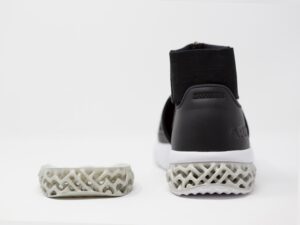
3d printed shoes

The Art of Dyeing

Dyeing is another valuable post-processing technique that goes hand in hand with vapor polishing. It involved adding color to the 3D printed part and offers a set of diverse advantages.

  1. Customization and Branding: Limitless color choices from standard color databases or custom made colors.
  2. Color coding and identification: In industries like health care and manufacturing, color coded parts can be used for easy identification, sorting, and assembly.
  3. Enhance UV resistance: Dyes can provide UV resistance, preventing color fading or degradation when expose to sunlight. This is crucial for outdoor and Long-term applications.

3d printed fashion

The Synergy of Vapor Polishing and Dyeing

When combined, vapor polishing and dyeing yield an impressive synergy that adds value to 3D printed parts. The smooth pristine surface achieved through vapor polishing serves as an idea canvas for dyeing, ensuring the colors are vivid, consistent, and long-lasting. This combination is particularly advantageous for producing consumer goods, intricate prototypes, and industrial components.

3d printed basketball

SNL Creative Partners with Multi-Talented Artist Jim McKenzie for an Exclusive Collectible Collaboration

By Manufacturing

In an exciting collaboration that’s sure to captivate art enthusiasts and collectors alike, SNL Creative proudly announces its partnership with the renowned artist, animator, and film director, Jim McKenzie. This visionary collaboration has brought forth a limited edition collectible that stands as a testament to the fusion of art, innovation, and creative mastery.

The collectible, available for viewing and purchase at Jim McKenzie’s official website www.jimmckenzieart.com, is a true marvel. Comprising sixteen meticulously crafted, removable, and interchangeable parts, this masterpiece invites admirers to explore and interact with its intricacies. SNL Creative’s involvement in the project has ensured that each component is flawlessly rendered, a result of their state-of-the-art manufacturing studio.

The production process, a true testament to SNL Creative’s prowess, was an in-house endeavor from start to finish. Employing cutting-edge techniques, the team harnessed 3D printing to create master patterns, while silicon tooling and castings brought the collectible to life with precision and accuracy. The journey continued with the skilled hands of their in-house fabrication and painting teams, ensuring that each piece emerged as a genuine work of art.

Excitement soars even higher as these collectibles play a pivotal role in Jim McKenzie’s upcoming short film, “Potato Face.” The film unveils every captivating step of the creation process, inviting audiences into the heart of artistic innovation. Scheduled for release in December 2023, the film promises to provide a mesmerizing glimpse into the synergy of artistic vision and technical brilliance.

Art enthusiasts, collectors, and fans of innovation can eagerly anticipate the dual unveiling of both the limited edition collectible and the behind-the-scenes magic in “Potato Face.” Jim McKenzie’s partnership with SNL Creative symbiotic relationship between craftsmanship and creativity, leaving an indelible mark on the world of contemporary art.

As the anticipation mounts, the collaboration between SNL Creative and Jim McKenzie stands as a beacon of innovation, reminding us all of the profound beauty that arises when artistic passion meets cutting-edge technology. With the release date of the short film drawing near, the art world holds its breath in collective excitement—ready to delve into the enigmatic realm of “Potato Face” and experience the masterpiece that is the limited edition collectible. Stay tuned for a journey that promises to redefine artistic boundaries and captivate hearts worldwide.

SNL Creatives New Facility is Now Operational!

By Manufacturing, Uncategorized

Cypress, CA – 8/15/23: SNL Creative, a leader in additive manufacturing, is thrilled to announce the inauguration of its state-of-the-art facility in Cypress, California. This facility stands as a testament to SNL Creatives’ commitment to pushing the boundaries of innovation in 3D printing and rapid prototyping, offering a diverse array of technologies and services.


Nestled in the heart of Cypress, Ca, the new facility boasts an impressive range of advanced 3D printing technologies, including Selective Laser Sintering (SLS), Stereolithography (SLA), Material Jetting, Fused Deposition Modeling (FDM), and Continuous Fiber Fabrication (CFF). This comprehensive suite of technologies empowers clients to materialize their concepts with remarkable precision and efficiency.


Diversity extends to the materials as well, with a vast selection for both prototyping and qualified materials suitable for 3D printing solutions destined for the market. SNL Creatives’ dedication to material innovation ensures that clients have access to the latest and most suitable materials for their projects.


One of the facility’s highlights is the fully dedicated Prototype Tooling department, meticulously designed to facilitate high-volume production. Complemented by a specialized hard modeling team, SNL Creatives ensures that products achieve their desired appearance and functionality before entering the mass production stage.


Moreover, SNL Creatives offers a complete paint and post-processing team, guaranteeing the creation of impeccable final appearance models that are ready to captivate and impress.


The integration of automation shines through the Virtual Portal, where clients can seamlessly upload, request quotes, and place orders. This portal seamlessly syncs with the Manufacturing Execution System (MES) software, ensuring a streamlined production process while maintaining rigorous quality control at every phase.


“We are thrilled to introduce our new Cypress facility, a testament to our relentless pursuit of excellence,” commented Shawn Zindroski COO of SNL Creative. “Our investment in cutting-edge technology, coupled with our dedicated teams, positions us to redefine additive manufacturing. We are confident this facility will elevate both our capabilities and our customers’ experience.”


SNL Creatives’ new facility in Cypress, CA, signifies a monumental step toward the future of additive manufacturing. With its impressive technologies, diverse materials, and seamless automation, the facility promises to redefine the industry landscape and set new benchmarks for innovation.


For more information and inquiries, please visit http://www.snlcreative.com.


About SNL Creative:

SNL Creative stands at the forefront of additive manufacturing, offering cutting-edge 3D printing solutions and rapid prototyping services. The new facility in Cypress, CA, embodies the company’s dedication to pushing boundaries, embracing innovation, and ensuring client satisfaction through advanced technology and expert teams.