
Tariffs and shipping delays have pushed a lot of manufacturers to take a hard look at the parts they buy overseas. For low-volume parts, replacement parts, fixtures and products that change often, the fix is often not a new overseas supplier or a new injection mold. It’s printing the parts in the US, close to where they’re used. Here’s how that works, which parts it fits, and how to move a part from an overseas supplier to SNL Creative in Cypress, CA.
Why companies are rethinking overseas parts
Buying parts from overseas made sense when freight was cheap and predictable. That has changed. Tariffs add cost that can shift with little notice, ocean freight adds weeks, and any design change means a new order, a new minimum and another wait. For high-volume parts that never change, overseas molding can still win. For everything else, the math has moved.
- Cost you can’t plan. Tariff rates and duties can change between the quote and the delivery.
- Long lead times. A part that takes a few days to make can take 6 to 10 weeks to arrive.
- Minimum order quantities. Overseas suppliers often need large runs, so you pay for inventory you don’t need yet.
- Slow design changes. Every revision means new tooling or another full order.
Where US 3D printing fits
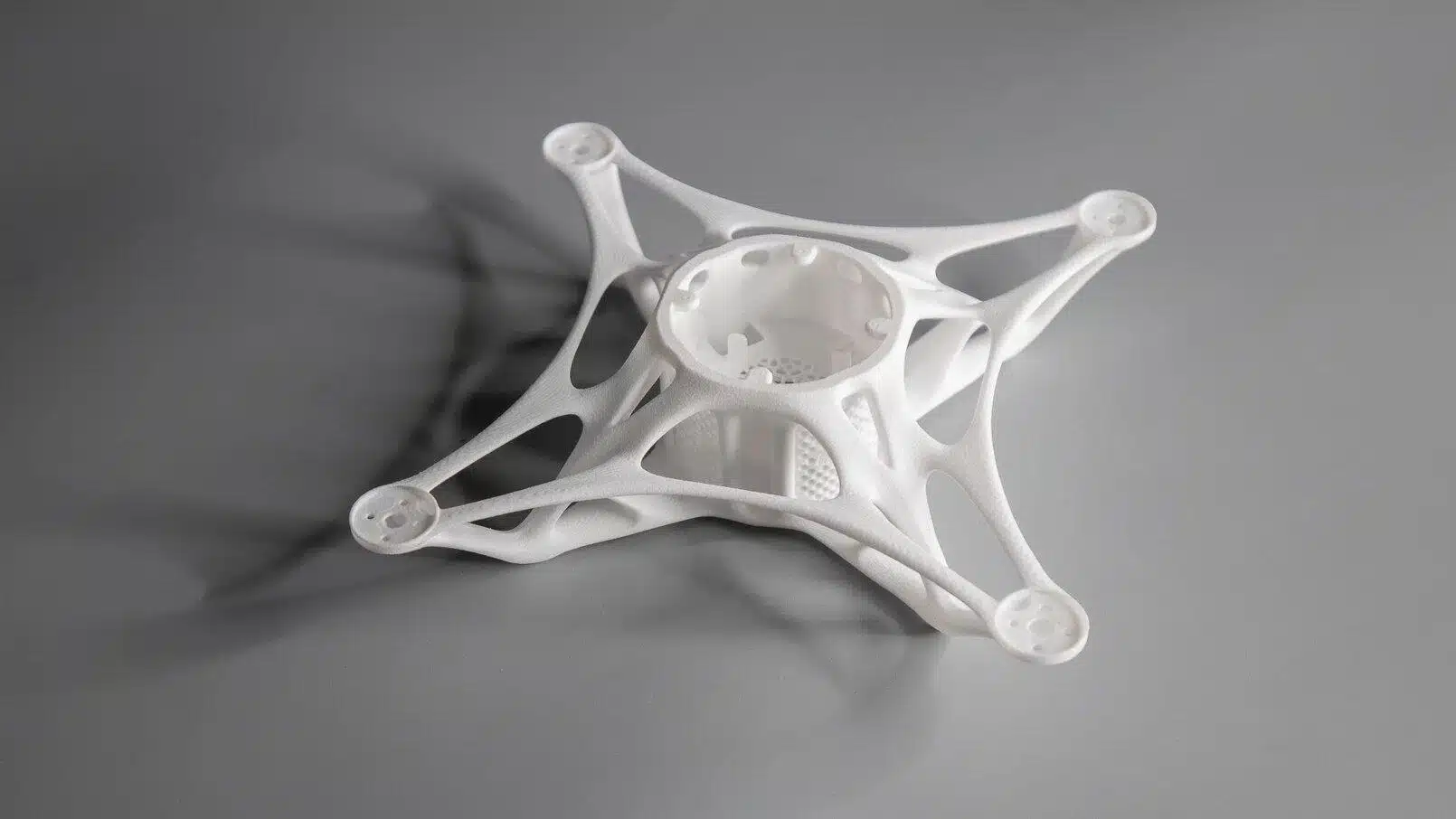
Industrial 3D printing has no tooling, so a run of 10 parts and a run of 1,000 parts use the same digital file. That makes it a strong fit for parts that are needed in low or medium volumes, or that change often.
- Low-volume production parts: housings, brackets, clips, ducts and covers in runs from one to a few thousand.
- Bridge production: parts that keep the line moving while a mold is being built, or while you wait on an overseas order.
- Spare and replacement parts: print on demand instead of holding stock or waiting on a supplier.
- Jigs, fixtures and tooling: shop-floor aids made in days, not weeks.
- Products that change often: update the CAD and the next batch has the change. No retooling.
Which process to use
The right process depends on what the part has to do. These are the processes SNL Creative uses for production work:
- SLS nylon. Strong, functional PA12, PA11 and TPU parts with no support structures, printed in-house on our EOS P396. A good fit for housings, brackets, snap fits and parts that replace injection-molded nylon.
- MJF. Production nylon parts with fine detail and consistent properties, well suited to medium runs of small and mid-size parts.
- SLA resin. Smooth, accurate parts for cosmetic covers, clear parts and master patterns, including large parts on our 800 machine (800 × 800 × 600 mm).
- Bambu Lab print farm. Fast, low-cost FDM parts in volume for fixtures, enclosures and everyday parts.
Finishing makes the parts look and feel like production parts: vapor smoothing and DyeMansion dyeing for nylon, and sanding, priming and painting for resin.
No CAD file? Start with the part
Many overseas parts arrive without drawings or a CAD model you can use. That’s not a dead end. We can 3D scan the part and rebuild it as editable CAD (STEP or IGES) using our ZEISS ATOS blue-light scanner, then compare the new model to the scan with a color deviation map. Once you own the CAD, you can print it, change it or send it to any shop you like.
How to move a part from overseas to SNL
- Pick the right parts. Start with low-volume parts, parts with long lead times and parts that change often.
- Send the CAD or the part. Upload files to our instant quote tool, or email photos and dimensions to orders@snlcreative.com if you need the part scanned.
- Choose the process and material. We’ll recommend SLS, MJF, SLA or FDM based on strength, finish and quantity.
- Test a few parts. Check fit and function before you commit to a full run.
- Order what you need, when you need it. Reorder from the same file without minimums or retooling.
Quality you can document
Moving a part closer to home only helps if the quality holds up. SNL Creative is ISO 9001:2015 certified, with process controls, material traceability and quality records on every job. We’ve been making parts in Southern California since 2008 for aerospace, automotive, consumer products, entertainment and sporting goods customers.
Frequently asked questions
Is 3D printing cheaper than buying parts overseas?
For low-volume parts, often yes, once you count tariffs, freight, minimum orders and inventory. For very high volumes of a part that never changes, overseas injection molding can still cost less per part. We’re happy to help you compare.
Can 3D printed parts replace injection-molded parts?
For many parts, yes. SLS and MJF nylon parts are strong and functional and are used as end-use production parts. Some parts need small design changes to print well, and we can help with that.
What if I don’t have a CAD file?
We can 3D scan the physical part and rebuild it as editable CAD. See our reverse engineering service.
How fast can I get parts?
It depends on the process, quantity and finishing. Many orders ship in days, not the weeks overseas freight takes. Upload your files for a quote and lead time.
How many parts can you make?
Anything from a single part to production runs of thousands, with no tooling and no minimum order.
Get an instant 3D printing quote
Related services: SLS 3D printing · MJF 3D printing · Reverse engineering and scan-to-CAD · All 3D printing services