SLS 3D Printing Service
SLS 3D Printing Service for Nylon Prototypes and Production Parts
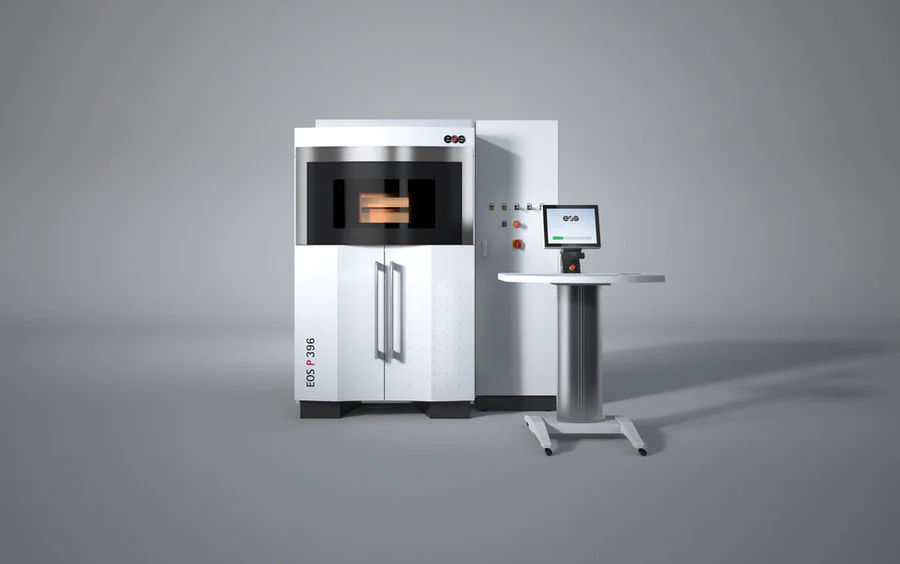
Selective laser sintering on our in-house EOS P396 in Cypress, CA, with larger parts on the EOS P 700. Strong PA12, PA11 and TPU parts with no support structures, built under an ISO 9001:2015 quality system and finished on site.
- EOS P396 + P 700 industrial SLS
- 700 × 380 × 580 mm max build (P 700)
- ±0.25% typical tolerance (PA12)
- ISO 9001:2015 certified
Why SLS
Functional nylon parts without support structures
SLS fuses nylon powder with a laser, layer by layer. The unsintered powder holds every part in place while it prints, so overhangs, internal channels, snap fits and lattices build without supports. That's why SLS is the go-to process for parts that have to work, not just look right.
Production-grade strength
PA12 and PA11 parts are tough, chemical resistant and ready for real mechanical testing or end use.
Total design freedom
Lattices, interlocking assemblies, living hinges and organic shapes print as one piece.
Lower cost per part at volume
Parts are nested through the full build chamber, so a whole batch of parts shares one build.
Finished in house
Bead blasting, vapor smoothing, dyeing and coating happen under the same roof, with one point of contact.
From our shop
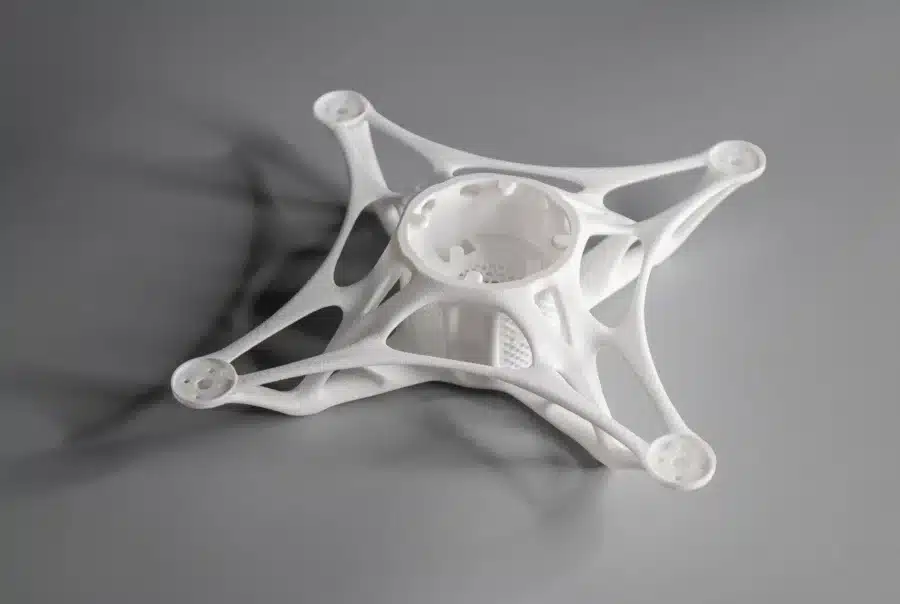
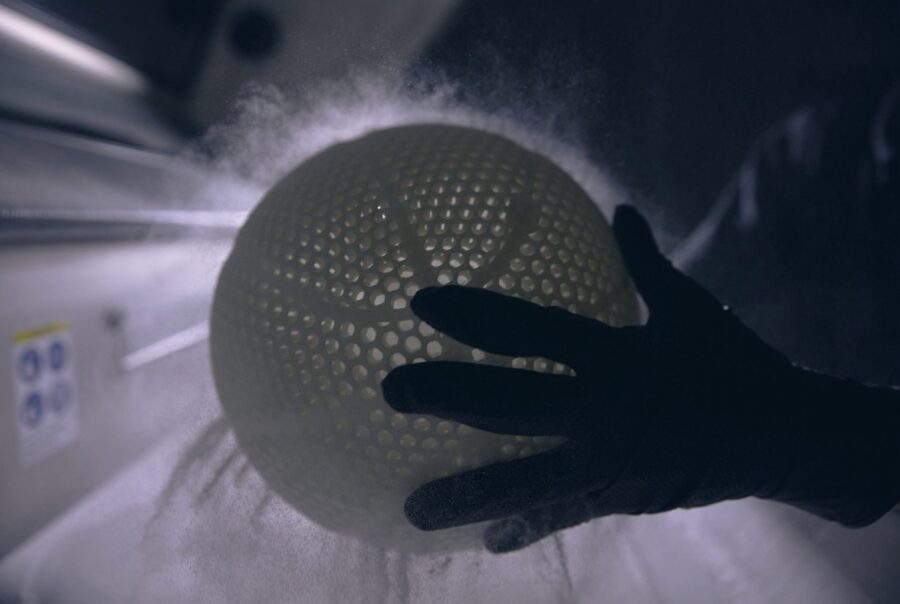
SLS parts we print
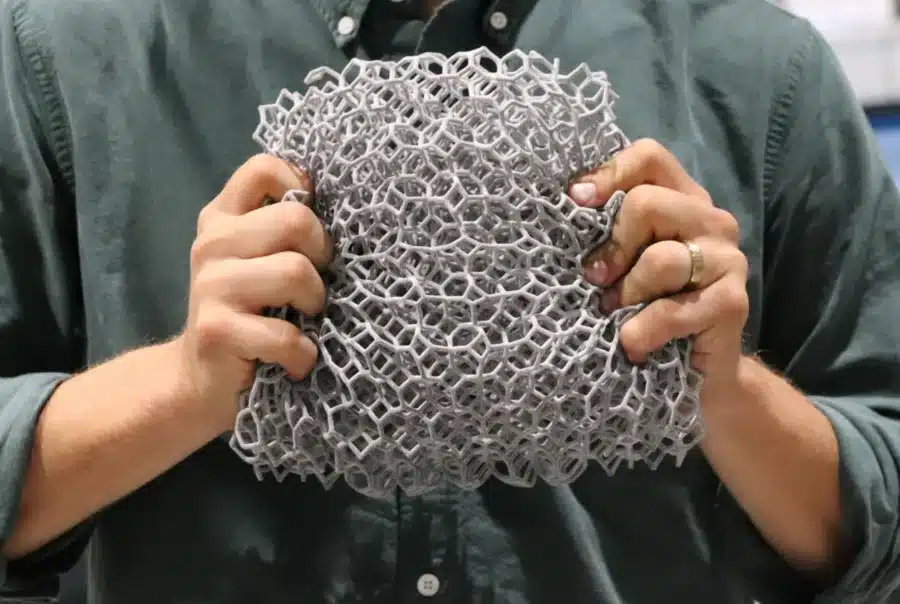
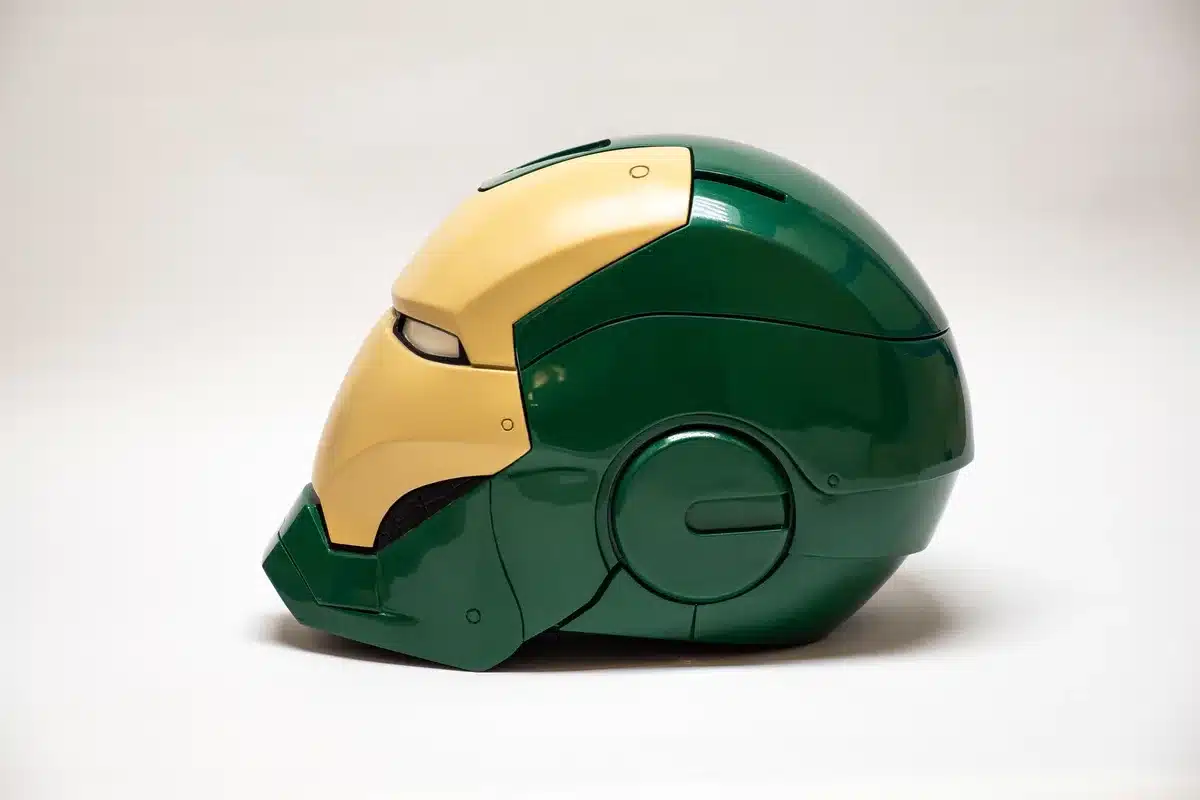
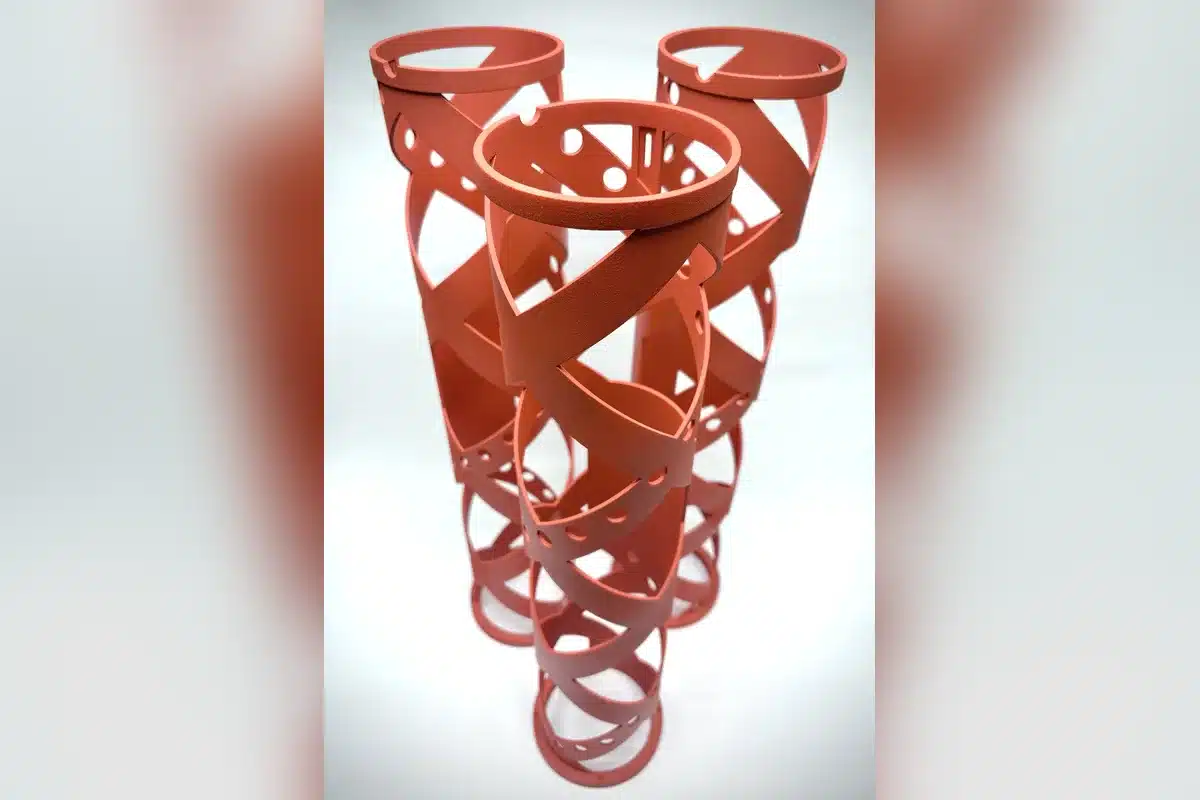
Real parts from our EOS P396, from drone frames to flexible TPU lattices.

Materials
SLS materials we run
| Material | Best for | Key properties |
|---|---|---|
| Nylon 12 (PA 2200) | Housings, brackets, jigs and fixtures, end-use parts | Strong, durable, chemically resistant; the all-round workhorse |
| Nylon 11 (PA 1100) | Clips, hinges, impact-loaded parts | Higher ductility and impact resistance than PA12 |
| TPU 1301 | Seals, grips, padding, TPU lattices | Flexible, rubber-like, rebounds after compression |
Need a specific color or surface? See our SLS and MJF finishing guide for vapor smoothing and dye options.
Applications
What our customers make with SLS
Functional prototypes
Fit, form and function testing with parts that behave like the final product.
End-use production
Low- to mid-volume runs without tooling, for robotics, drones, consumer products and more.
Medical devices
Durable housings and components. See SLS for medical devices.
Jigs, fixtures and tooling
Lightweight manufacturing aids that are fast to replace and easy to modify.
Specs and design rules
SLS design guidelines
Design to these numbers and your parts will print right the first time. If you're not sure, upload your file and we'll flag problems before anything prints.
| Feature | Guideline |
|---|---|
| Maximum build size | 340 × 340 × 600 mm (EOS P396) or 700 × 380 × 580 mm (EOS P 700) |
| Layer height | 60–120 µm (100 µm standard) |
| Tolerance, PA12 | ±0.25%, minimum ±0.25 mm |
| Tolerance, TPU | XY ±0.50 mm, Z ±1.50 mm |
| Min wall, supported | 0.8–1.0 mm |
| Min wall, unsupported | 1.5 mm |
| Min pin diameter | 0.8 mm |
| Min hole / gap | 0.5–0.7 mm depending on wall thickness |
| Clearance, moving parts | 0.5 mm (hinges and linkages 0.6 mm) |
| Press-fit offset | 0.1 mm |
| Engraved / embossed detail | 0.5 mm min width and depth |
| Text | 14 pt min, sans-serif, 0.5 mm line weight |
| Escape holes | 4 mm (or two 2 mm holes on larger parts) |
| Threads | M6 or larger with 0.5 mm offset; use inserts for frequent assembly |
| Surface | Uniform matte; machinable after printing |
Large flat surfaces can warp. Tolerances depend on geometry and orientation.
How it works
From file to finished SLS parts
- Upload your CAD. STL, STEP or 3MF through the instant quote, or email orders@snlcreative.com.
- Design check. We review wall thickness, clearances and escape holes, and tell you about anything that could fail.
- Nesting and printing. Parts are packed through the full build chamber on the EOS P396.
- Depowdering and finishing. Parts are cleaned and bead blasted, then vapor smoothed, dyed or coated if you choose.
- Inspection and shipping. Parts are checked under our ISO 9001:2015 quality system and shipped from Cypress, CA.
Compare
SLS vs. MJF: which one?
Both are powder bed processes that make strong nylon parts without supports, and we run both in house. SLS gives you more material choice (PA12, PA11 and flexible TPU) and a taller 600 mm build. MJF is a strong fit for high-volume PA12 parts. Not sure? Upload your file and we'll recommend the better process for your part.
FAQ
SLS 3D printing questions
What is SLS 3D printing?+
Selective laser sintering (SLS) uses a laser to fuse thin layers of nylon powder into solid parts. The surrounding powder supports the part as it prints, so complex shapes need no support structures.
What SLS materials do you offer?+
We print Nylon 12 (PA 2200), Nylon 11 (PA 1100) and flexible TPU 1301 on our EOS P396.
How big can an SLS part be?+
Up to 340 × 340 × 600 mm on the EOS P396, or 700 × 380 × 580 mm on the EOS P 700 for parts that need more length and width. Anything larger can be split and bonded.
How accurate are SLS parts?+
PA12 parts typically hold ±0.25% with a minimum of ±0.25 mm. TPU holds XY ±0.50 mm and Z ±1.50 mm. Critical features can be machined after printing.
Can SLS parts be colored or smoothed?+
Yes. Parts come out a uniform matte white and can be bead blasted, vapor smoothed, dyed or coated in house.
Is SLS good for production, not just prototypes?+
Yes. SLS nylon is used for end-use parts, and because parts are nested through the whole build, per-part cost drops as quantities rise. Our ISO 9001:2015 system keeps runs repeatable.
How do I get a price?+
Upload your file to our instant quote for SLS pricing in minutes, or email orders@snlcreative.com for a reviewed quote.
Ready to print in SLS?
Upload your CAD for an instant price, or talk to our team about production runs.